Innovative Design for Affordable, Modern & Modular Homes & Factories
Pioneering modular construction techniques for faster and more affordable housing & factories.
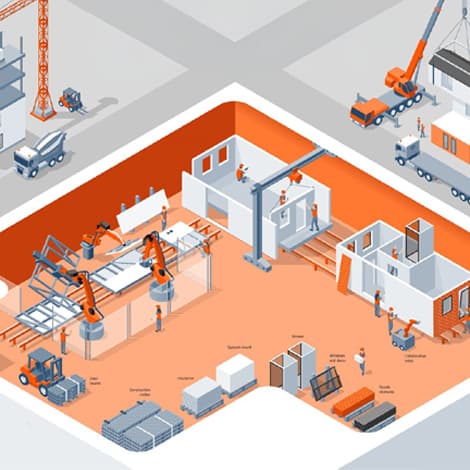
Accelerating Modular and Affordable Housing in Canada
A Unified Framework for Government, Investors, and Industry
Introduction
Across the world, housing is increasingly recognized as a fundamental element of economic stability, social well-being, and national growth. Many countries have embraced modular construction and innovative housing systems to accelerate the delivery of affordable homes. These models enable governments and private sectors to build faster, reduce costs, and respond effectively to housing shortages.
Canada is now entering a crucial phase where bold and coordinated action is required to close the housing supply gap. Recent initiatives by federal authorities demonstrate a strong commitment to expanding housing capacity and encouraging modular construction. However, the success of these initiatives depends on one critical factor: alignment among all stakeholders.
The Current Challenge
Despite strong intent and policy direction, housing development in Canada often faces prolonged timelines due to fragmented processes and multi-layer approvals across different jurisdictions. Developers and investors frequently encounter delays that extend project timelines from months into years. This discourages investment, increases project costs, and slows the delivery of much-needed housing.
At present, the housing ecosystem includes several key actors:
- Federal government policy and financing agencies
- Provincial regulatory and building code authorities
- Municipal planning and zoning departments
- Developers and builders
- Financial institutions and investors
- Industry professionals and suppliers
While each plays an important role, the lack of synchronization among these participants often creates administrative bottlenecks rather than enabling rapid housing delivery.
A Call for a Coordinated National Framework
To unlock Canada's full housing potential, there is a need for a coordinated national framework that brings all stakeholders under a unified platform. This framework should focus on collaboration, transparency, and efficiency.
The core objective is to transform housing development from a fragmented system into a synchronized ecosystem where policy, investment, construction, and approvals operate in harmony.
One of the most important reforms that could accelerate this process is the introduction of a prior-approval or pre-certification model for modular and innovative housing projects.
The Prior-Approval Model
Under a prior-approval framework, governments could establish clear guidelines and pre-approved standards for modular housing designs, construction systems, and project categories. Developers and investors who comply with these established standards could receive accelerated approvals.
This model would allow:
- Faster municipal processing
- Reduced regulatory uncertainty
- Stronger investor confidence
- Quicker mobilization of capital and construction resources
Rather than spending years navigating multiple approvals, stakeholders would have a clear pathway to move projects forward quickly and responsibly.
The Role of Investors and Industry
Investors, developers, manufacturers, and construction professionals also carry a shared responsibility in addressing Canada's housing needs. With a transparent and efficient framework in place, private capital can play a major role in expanding housing supply.
Domestic and international investors are increasingly interested in modular housing and innovative construction systems. However, they seek clarity, predictability, and timely approvals before committing resources to large-scale projects.
A streamlined framework would encourage these stakeholders to participate confidently in Canada's housing sector.
The WILLSERVE Initiative
WILLSERVE Canada is working to support this vision by connecting stakeholders across the housing ecosystem. The initiative aims to bring together policymakers, municipalities, developers, builders, investors, and industry experts on a collaborative platform.
The goal is not to replace existing institutions — but to help synchronize them, enabling faster decision-making, knowledge sharing, and coordinated project implementation.
By acting as a connector and facilitator, WILLSERVE seeks to support Canada's transition toward scalable modular housing solutions and more efficient development processes.
Moving Forward
Canada possesses the talent, technology, and resources needed to lead in modern housing development. What is required now is stronger alignment between policy direction and project execution.
A national effort built on collaboration, pre-approved development frameworks, and stakeholder coordination can dramatically accelerate housing delivery across the country.
With the collective participation of government leaders, investors, developers, and community stakeholders, Canada can move toward a future where innovative housing solutions are delivered efficiently and responsibly for the benefit of all citizens.
Conclusion
Housing is more than a construction issue — it is a foundation of economic opportunity, social stability, and national progress. By adopting collaborative frameworks and enabling faster project pathways, Canada can unlock significant housing capacity and ensure that innovation in modular construction contributes meaningfully to the nation's housing future.
WILLSERVE Canada stands ready to support this shared mission and help bring stakeholders together under one coordinated vision for progress.